
Flat roofing · Didsbury
Replace the flat-roof system when another patch is no longer enough.
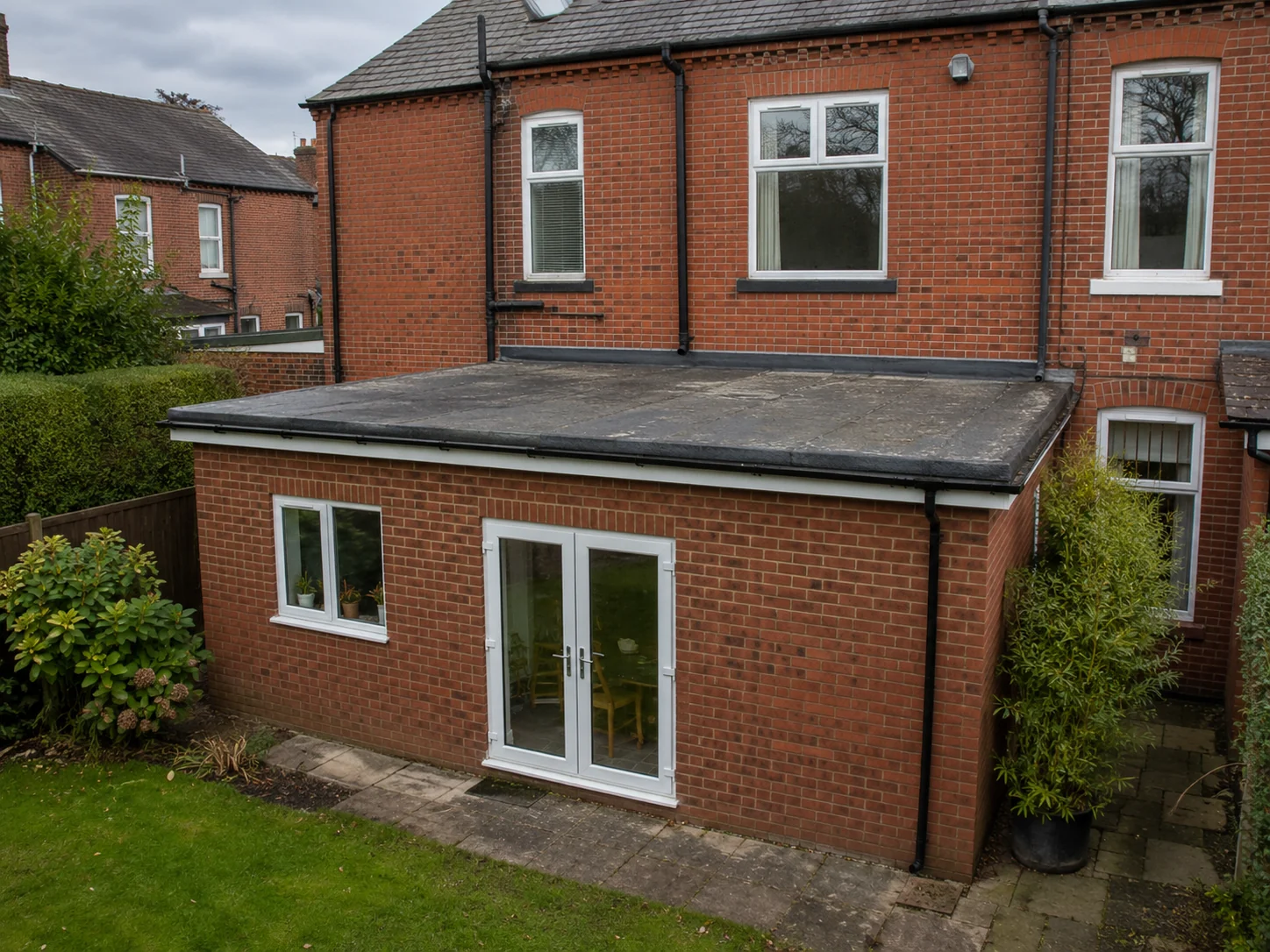
The rear extension has an ageing flat-roof covering with recurring leakage and evidence of previous patch repairs.
The problem is no longer treated as one small isolated defect.
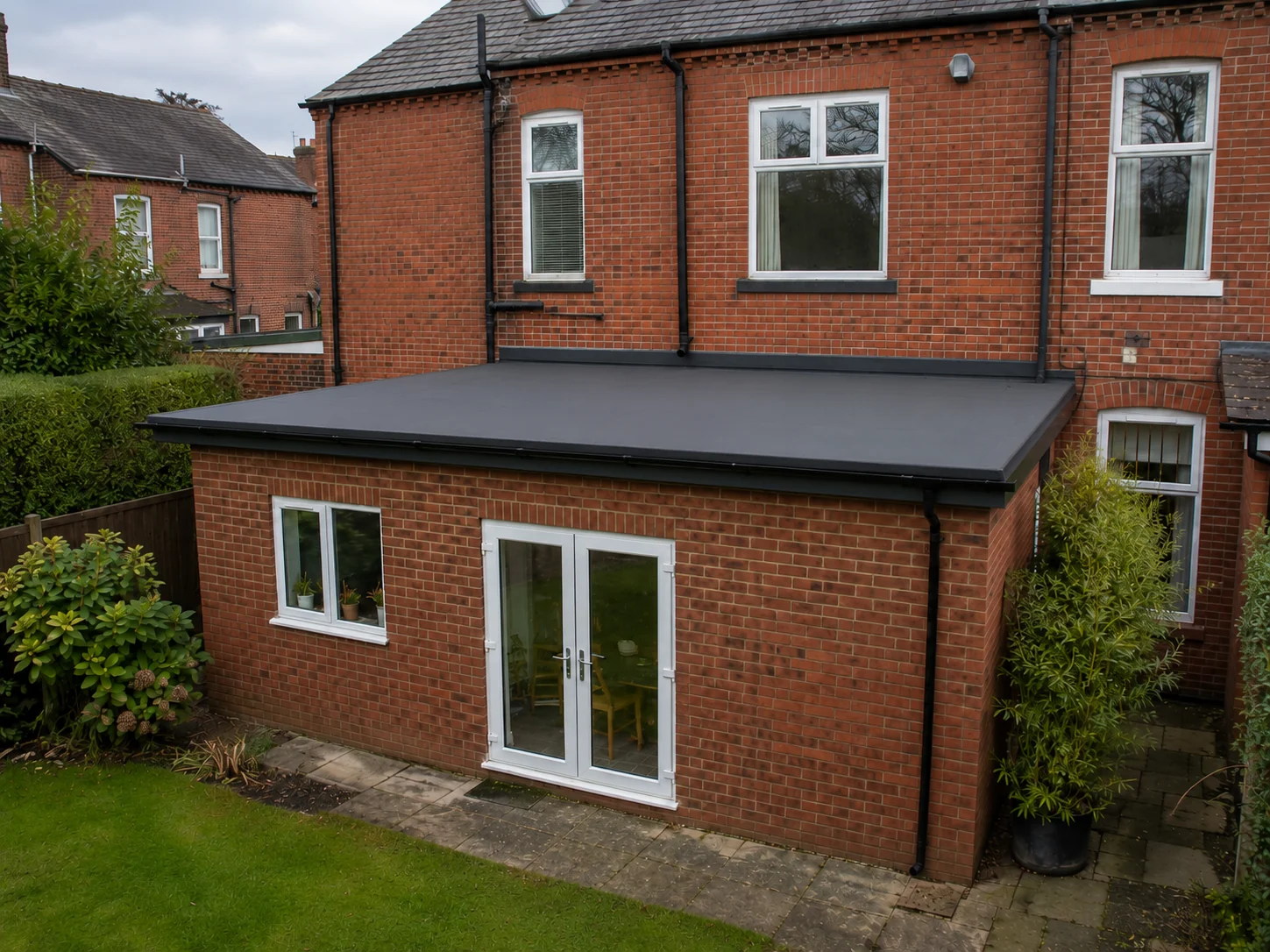
The project therefore demonstrates a complete replacement using a specified warm-roof build-up with EPDM waterproofing.
Project snapshot
- Location
- Didsbury
- Property
- Residential home with a later rear extension
- Roof form
- Low-slope flat roof
- Existing covering
- Ageing bituminous sheet/felt-type covering with previous repairs
- Homeowner concern
- Recurring water ingress after rainfall
- Scenario decision
- Complete warm-roof EPDM replacement
01
Repeated repairs are no longer creating a reliable roof.
The homeowner has already dealt with local patch repairs. Water ingress has returned and the visible roof shows broader age and deterioration.
The assessment asks whether the existing covering and build-up are still a sensible basis for further local repair.
02
Check more than the waterproof surface.
- An ageing existing waterproof covering
- Several previous local repair areas
- Recurring leakage
- Deterioration across the covering
- Local standing water
- Roof-edge and abutment details requiring consideration
03
One selected system for one specific scenario.
EPDM provides one plausible flexible waterproofing solution for this residential extension. It is not presented as the only system, universally superior or suitable for every deck and geometry.
04
Consider waterproofing, insulation and condensation together.
The project uses a warm-roof concept rather than treating replacement as only a new visible membrane. A real design considers structure, thermal requirements, vapour control, condensation risk, substrate, perimeter details, drainage and fire requirements.
05
A flat roof still needs to drain.
Local standing water raises questions about roof falls, drainage direction, the outlet or gutter position and edge details. It does not automatically prove that the membrane caused the problem.
06
Do not hide the substrate beneath a new membrane.
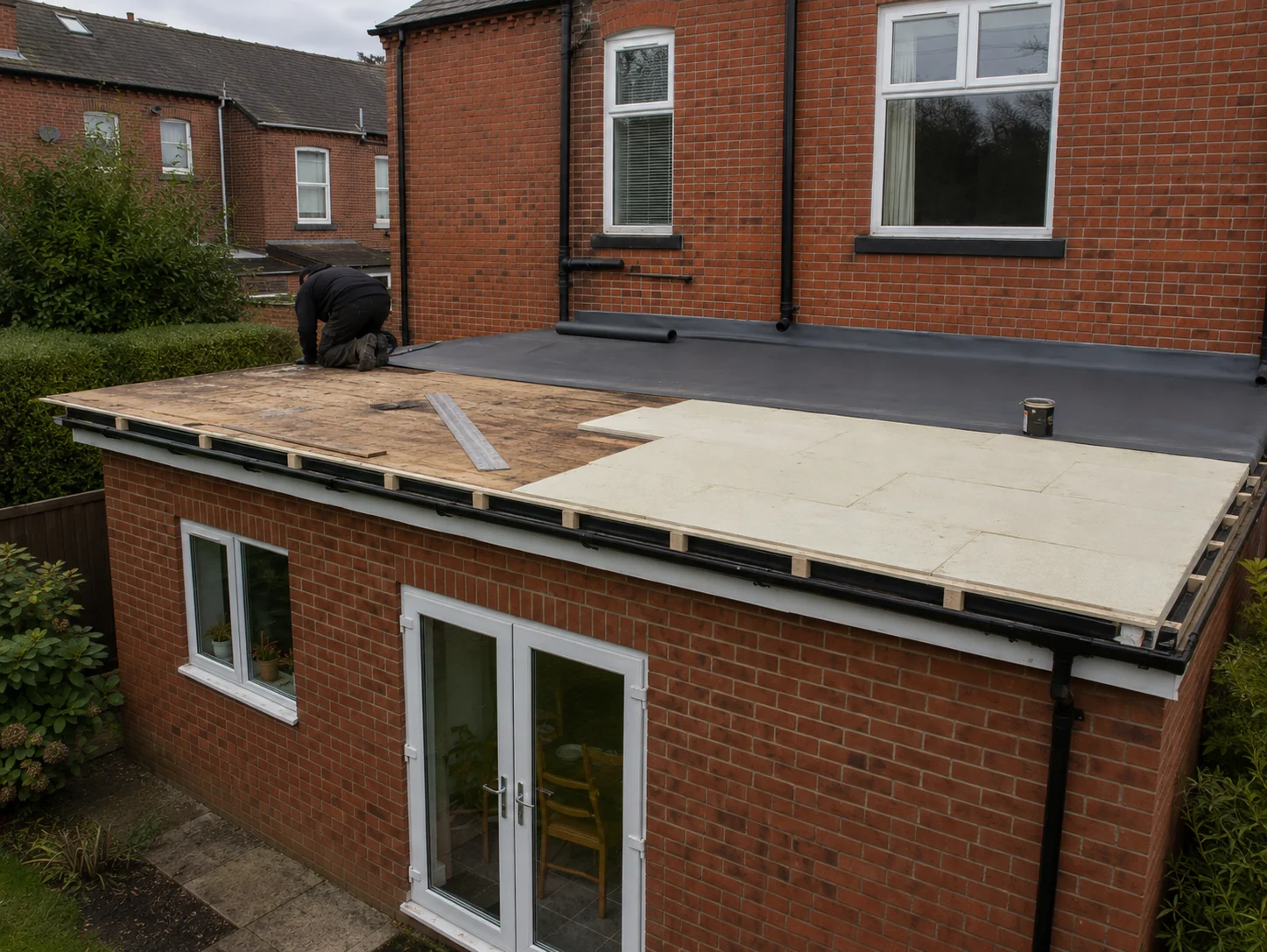
Once the old covering is removed, the supporting deck can be inspected. This scenario includes a limited unsuitable area near one edge that requires renewal before the new build-up is completed.
07
The exact layers belong to the system specification.
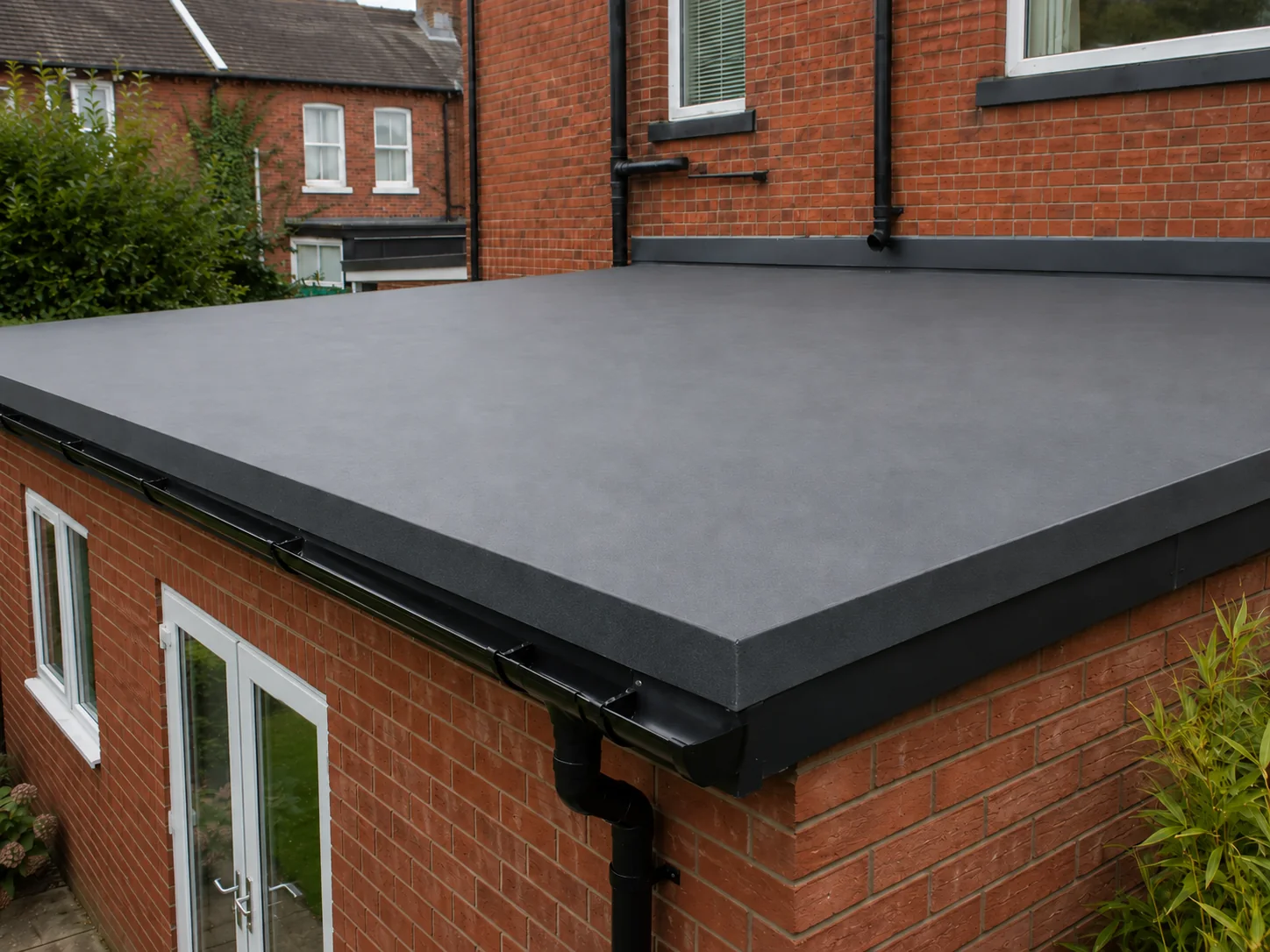
At homeowner level, the build-up includes retained suitable structure, prepared deck, a designed thermal and vapour-control arrangement, suitable cover layer where required, EPDM waterproofing and correctly completed wall, perimeter and drainage details.
The concept does not invent insulation thickness, membrane thickness, adhesive coverage, fixing spacing or a U-value.
Proposed work
Work through the agreed scope in a controlled sequence.
- 01Arrange safe access and protection
- 02Remove the existing waterproof covering
- 03Inspect the exposed deck and supporting construction
- 04Renew agreed unsuitable local deck material
- 05Confirm falls and drainage
- 06Prepare the specified warm-roof build-up
- 07Install required vapour-control and thermal layers
- 08Provide the substrate or cover layer required by the system
- 09Install the selected EPDM membrane
- 10Complete perimeter, upstand, abutment and drainage details
- 11Inspect the completed waterproofing and drainage
- 12Clear the work area and hand over the project
Work sequence
How the project progresses
- 01
Strip the failed covering
Remove the ageing waterproof layer within scope.
- 02
Inspect the deck
Identify unsuitable local substrate.
- 03
Correct agreed deck defects
Renew affected areas before covering them.
- 04
Confirm falls and drainage
Make sure the build-up works with the intended water path.
- 05
Form the warm-roof build-up
Install thermal and vapour-control layers to the design.
- 06
Install EPDM waterproofing
Apply the membrane to the specified system.
- 07
Complete all details
Finish edges, corners, wall abutment and drainage interface.
- 08
Inspect and hand over
Review the completed roof and drainage arrangement.
Scenario outcome
What changes in the completed scenario
This scenario illustrates the intended result, not a completed Rookstone Roofing job.
- The deteriorated old covering has been removed.
- The exposed deck has been inspected and the local defect addressed.
- Thermal and moisture considerations form part of the roof design.
- The EPDM waterproofing has been installed.
- Wall, perimeter and drainage details have been completed.
- Another patch has not been added to an already failing covering.
Project questions
Questions this scenario helps answer
Does a leaking flat roof always need complete replacement?
No. Local defects may still suit repair where the wider system remains serviceable.
Why was replacement selected in this scenario?
Because the covering has broad deterioration, repeated prior repairs and recurring leakage.
Why use EPDM?
EPDM is one plausible flexible membrane system for this roof scenario, not a universally preferable choice.
Why consider insulation during replacement?
When a roof is comprehensively renewed, thermal and condensation requirements can become part of real project design.
Does a flat roof need a slope?
Flat roofs still require appropriate falls and drainage; they should not be assumed to work as perfectly level surfaces.
Repeatedly patching the same flat roof?
Describe what has been happening and whether repairs have already been attempted. The roof condition should determine whether another repair or complete replacement makes sense.
This is a fictional website demonstration. The quote experience does not send or store your information.