
New roofs & re-roofing
When repeated repairs stop being the sensible long-term route.
A complete re-roof is significant work and should not be recommended simply because a roof has one problem.
It becomes worth considering when age, condition and repeated deterioration affect the roof more broadly.
The objective is to understand whether continued local repairs remain sensible or whether replacing the roof covering provides a clearer long-term solution.
01
What can make a full re-roof worth considering?
Replacement may deserve consideration where there is evidence of broader roof deterioration rather than one isolated failure. None of these points alone creates an automatic recommendation; the existing roof still needs to be assessed.
- Recurring repairs in different areas
- Widespread damaged or deteriorated coverings
- An ageing roof with continuing defects
- Major renovation where the roof condition also needs addressing
- Repair work becoming increasingly extensive
02
More than simply changing the visible tiles or slates.
A typical pitched re-roof may involve safe access, removing the existing covering, inspecting the exposed structure, agreed remedial work, a specified underlay and batten system, the selected slate or tile covering, and completion of ridge, verge, flashing and roof-junction details. The final specification should reflect the actual property.
03
The most expensive option should not automatically be the first option.
A roof with one repairable defect may have useful service remaining. By contrast, repeatedly repairing widespread deterioration can eventually become less practical. The purpose is to make the decision understandable rather than push every enquiry toward replacement.
04
The right covering depends on the roof.
Pitched domestic roofs commonly use slate or tile coverings, but the correct choice depends on the existing roof, pitch, structural considerations, property constraints, appearance and the detailed system specification.
The Rookstone approach
A clear route from the symptom to the scope.
- 01
Assess the condition
Look beyond the most obvious failed area.
- 02
Discuss repair viability
Consider whether focused work can still solve the problem reasonably.
- 03
Explain why replacement is being considered
Make the reason clear.
- 04
Define the proposed system
Set out the intended covering and major work stages.
- 05
Provide a written quotation
Document the proposed scope.
- 06
Agree practical arrangements
Confirm access, timing and relevant property considerations.
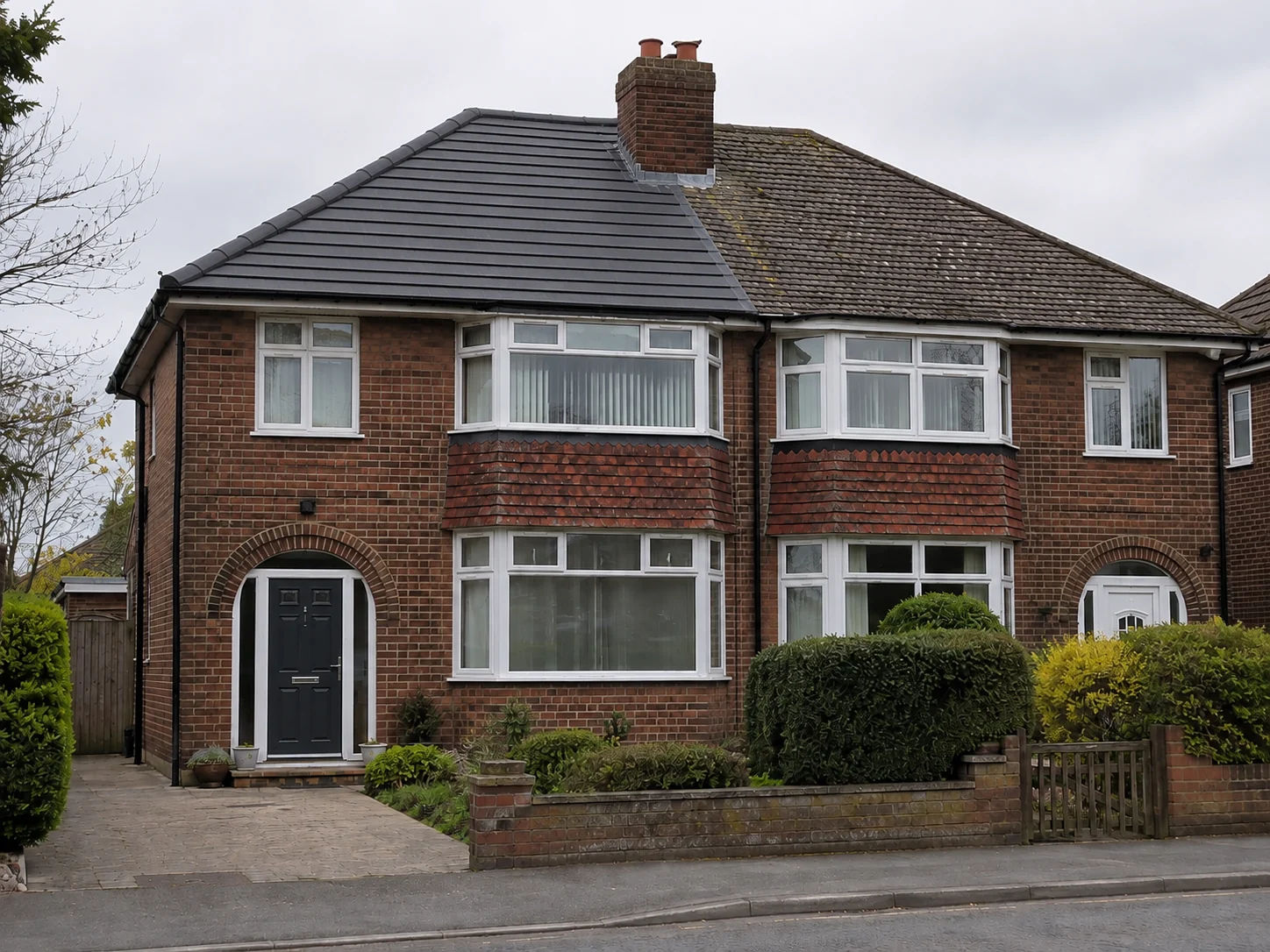
Fictional project scenario
Full Re-Roof — Cheadle Hulme
This fictional semi-detached property has moved beyond one isolated repair. The scenario shows why full replacement is proposed and how that differs from selling a new roof from the outset.
View project scenarioCommon questions
Questions about new roofs & re-roofing
How do I know when a roof needs replacing?
There is no single website symptom that proves a roof requires complete replacement. The extent of deterioration, surrounding roof condition and repair history all matter.
Is a new roof always better than repairing the old one?
Not if the problem is genuinely local and the wider roof remains serviceable. Replacement should be justified by condition and scope.
Does every re-roof use the same materials?
No. Roof pitch, construction, appearance, structural requirements and the chosen roof system can affect the specification.
What happens to the existing roof covering?
A re-roof normally involves removing the covering to the extent required by the agreed replacement specification.
Can fascias, soffits or guttering be addressed at the same time?
They may be included where relevant, but roofline work should be specified deliberately rather than assumed.
Wondering whether another repair is enough?
Start with the condition and repair history of the roof. The decision between repair and replacement should follow the assessment.
This is a fictional website demonstration. The quote experience does not send or store your information.